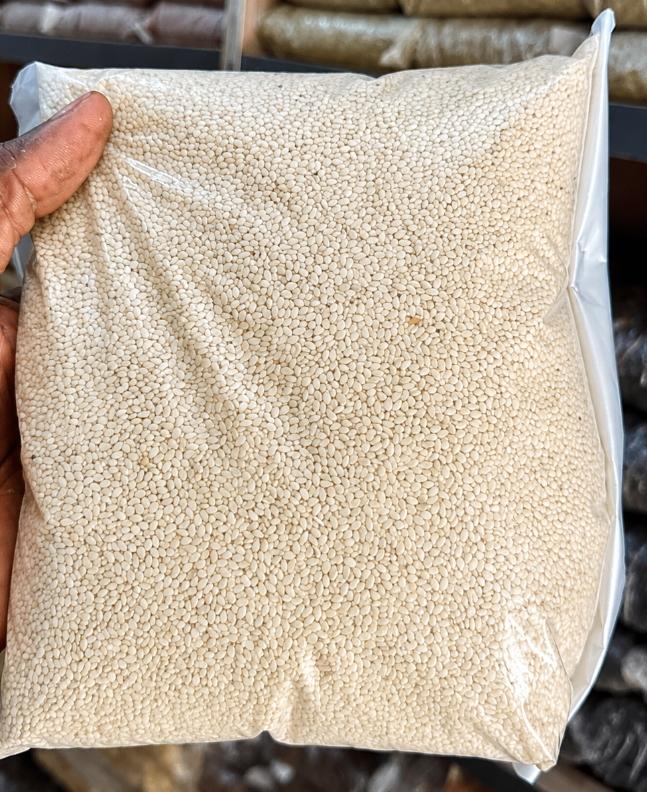


Sesame seeds are small but packed with nutrients and health benefits.
Benefits of Sesame Seeds
(1)Rich in Healthy Nutrients
Sesame seeds provide:
Protein
Healthy fats (mostly unsaturated fats)
Fiber
Calcium
Iron
Magnesium
Zinc
B vitamins
(2)
Support Heart Health
The healthy fats and plant compounds in sesame seeds may help:
Lower LDL (“bad”) cholesterol
Support healthy blood pressure
Reduce inflammation
(3)Good for Bones
Sesame seeds contain calcium, magnesium, phosphorus, and zinc, which are important for maintaining strong bones and teeth.
(4)Aid Digestion
Their fiber content can:
Promote regular bowel movements
Support a healthy gut microbiome
Help prevent constipation
(5)May Help Control Blood Sugar
The combination of fiber, protein, and healthy fats can slow digestion and help stabilize blood sugar levels when eaten as part of a balanced meal.
(6) Rich in Antioxidants
Sesame seeds contain compounds such as sesamin and sesamol, which help protect cells from oxidative stress.
(7) Support Skin and Hair Health
Their vitamin E, zinc, and healthy fat content may contribute to:
Healthier skin
Stronger hair
Better wound healing
How Much to Eat?
A typical serving is 1–2 tablespoons (9–18 g) per day. You can add them to:
Salads
Yogurt
Oatmeal
Smoothies
Stir-fries
Breads and baked foods
A Note About Calcium
If you’re eating sesame seeds mainly for calcium, ground sesame seeds or tahini (a paste made from Sesame Seed) may be better because the nutrients are easier to absorb than from whole seeds.
If you have a sesame allergy, avoid sesame seeds and foods containing them.